

Kats casino Plinko
Introduction
When I look at Kats casino Plinko, I see a format that seems almost too simple at first glance. There is no reel set, no payline map, no long bonus guide to study before the first round. A ball drops from the top of the board, bounces through a field of pegs, and lands in a payout slot at the bottom. That is the whole visual idea. Yet in practice, Plinko creates a very specific kind of tension that many traditional Kats Casino Gates of Olympus slot do not reproduce in the same way.
For players in New Zealand who want to understand what this title actually offers, the key point is this: Plinko is not interesting because it looks complex. It is interesting because it turns a transparent-looking process into a highly variable betting experience. You can watch the path. You can follow every bounce. You feel as if you are seeing randomness unfold in real time. That feeling is a big part of why Plinko has become so noticeable across modern casino platforms.
In this review, I will focus strictly on the game itself: how Plinko at Kats casino works, what drives its pace, where the real risk sits, how the different risk modes change the session, and what a player should realistically expect before placing the first bet.
What Plinko is and why it draws attention so quickly
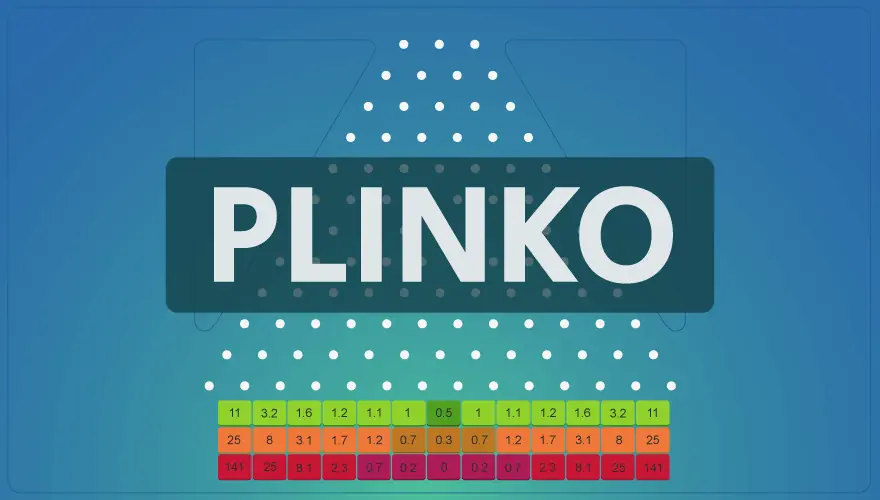
Plinko is a chance-based casino game built around a vertical board filled with pins or pegs. The player chooses a stake, usually selects a risk level, and then releases one or several balls from the top. As each ball falls, it collides with pegs and changes direction until it reaches one of the multiplier slots at the bottom.
That description sounds minimal, and that is exactly part of its appeal. The entry barrier is low. A new player does not need to decode bonus symbols, stacked wilds, expanding reels, cluster pays, or side features. The interface is usually clean. The action begins immediately. In a market full of crowded slot layouts, Plinko stands out because it strips the experience down to one visible event: the descent.
What makes Kats casino Plinko game especially noticeable is the contrast between visual simplicity and emotional effect. You are not just waiting for an outcome to appear on a static result screen. You are watching the route develop second by second. That creates anticipation in a more physical way than many digital casino games manage.
I would highlight three reasons why the title catches attention so effectively:
- Instant readability. Even first-time players understand the core idea within seconds.
- Visible randomness. The ball’s path gives the impression of witnessing chance rather than merely receiving a number.
- Fast decision loop. Stake, risk setting, drop, result, repeat. The cycle is short, which keeps engagement high.
One observation that often gets missed in generic Trustpilot ratings overview: Plinko feels more “honest” to some players not because it is more predictable, but because the uncertainty is visible. That distinction matters. The game is still governed by probability, yet it presents randomness in a way the eye can follow.
How the core Plinko system actually works
At a structural level, Plinko is built on a simple sequence. You choose your bet size, select a row count if the version allows it, set a risk mode, and drop the ball. The ball then moves downward through a triangular grid of pegs. Every collision can send it left or right. By the time it reaches the bottom, it lands in a slot associated with a multiplier.
The multiplier determines the return on that specific drop. If the ball lands in a low-value central area, the return may be small, break-even, or below the stake depending on the paytable. If it reaches an outer slot, the multiplier can be much higher. Those edge outcomes are usually the ones players remember, but they are also the least frequent.
In many versions of Plinko, including the format players expect on contemporary casino platforms, the board can be adjusted through settings such as:
- number of rows;
- risk level, often low, medium, or high;
- manual or auto-play style drop flow;
- single-ball or repeated drop rhythm.
These settings are not cosmetic. They change the distribution of possible outcomes. More rows generally mean a longer path and a wider multiplier spread. Higher risk settings usually compress the frequency of modest returns and shift more value toward rare top-end multipliers. In plain terms, the safer mode tends to produce more stable but less dramatic results, while the aggressive mode often creates longer dry stretches with occasional sharp spikes.
That is the practical logic behind the game. The board looks static, but the session profile changes meaningfully depending on how those parameters are set.
| Element | What it changes | What it means in a real session |
|---|---|---|
| Bet size | Value of each drop | Directly affects bankroll pressure and emotional intensity |
| Risk level | Outcome distribution | Higher settings usually mean rarer strong hits and more uneven sessions |
| Rows | Path length and payout spread | Can make results feel either smoother or more extreme |
| Auto-play pace | Session speed | Fast repetition can escalate losses or cycle variance quickly |
A second useful observation: the ball’s route can tempt players into reading patterns where none exist. A near miss on a high multiplier may feel meaningful because you saw the path almost reach the edge. In mathematical terms, that visual drama does not make the next drop more favorable. But psychologically, it can encourage another round faster than a slot spin would.
Why the game feels engaging and how its tempo affects decision-making
The rhythm of Plinko is one of its defining traits. A slot can be fast too, of course, but Plinko compresses anticipation into a very short and very visible sequence. The drop is brief, the result is immediate, and the next action is only one click away. That makes the game easy to continue without much reflection between rounds.
From a player’s perspective, the tempo does two things at once. First, it makes the title accessible. You do not need to wait through layered animations or bonus transitions. Second, it can reduce the natural pause that helps people assess what is happening to their balance. This is especially true in auto-play mode or when players increase the number of drops in quick succession.
At Kats casino, as with any platform offering this style of title, understanding the pace is more important than understanding the visuals. The board itself is not difficult to read. The real challenge is managing the speed at which outcomes accumulate.
What keeps interest high is not just the possibility of a large multiplier. It is the repeated contrast between ordinary landings and the sense that a more valuable slot is always just a slightly different bounce away. Plinko is excellent at producing “almost” moments. Those moments do not change the probabilities, but they strongly shape how the session feels.
I would describe the tempo of Plinko as short-cycle suspense. Unlike a table game where tension may build around strategic decisions, or a slot where a bonus round creates a separate event, Plinko generates a small burst of suspense on nearly every drop. If a player enjoys frequent micro-moments of anticipation, this format can be very effective. If they prefer slower games with more tactical input, it may feel repetitive surprisingly quickly.
Risk levels, probability distribution, and who should be careful
Risk is where Plinko stops being a simple novelty and becomes a serious bankroll game. The interface may look friendly, but the payout structure can become sharp, especially on high-risk settings. This is the point many first-time players underestimate.
In low-risk mode, the distribution is usually flatter. That means the ball is more likely to land in modest multiplier zones, and the session may feel steadier. The trade-off is that the top-end multipliers are either lower or much less central to the expected experience. For some players, this version of Plinko feels manageable and easier to read over time.
In high-risk mode, the board often becomes far more polarized. Small or poor-return outcomes may dominate, while the largest multipliers sit on the extremes as rare events. This can create a session in which many drops fail to build momentum, then one strong result changes the picture sharply. It is exciting, but it can also drain a bankroll quickly if the player chases those edge outcomes without a plan.
That is why I do not think it is enough to say Plinko is “random.” The more useful statement is that its randomness can be tuned into different emotional profiles. Low risk often feels like controlled fluctuation. High risk feels like waiting for impact. Before you make a deposit, it is worth reading Kats Casino Sweet Bonanza slot review for the fee and speed details.
Before starting, a player should understand three practical points:
- Rare top multipliers are not a session baseline. They are the exception, not the expectation.
- Fast repetition magnifies variance. Even moderate stakes can become expensive when dozens of drops happen quickly.
- Near misses can distort judgment. Watching the ball flirt with a premium slot can trigger emotional chasing.
If someone is highly sensitive to streaks, dislikes uneven balance swings, or tends to increase stakes after dry runs, Plinko can be a difficult fit. The game does not require strategic mistakes to become costly. Speed alone can do that.
What the rhythm of results really means in practice
One of the most important things to understand about Kats casino Plinko is that the session experience depends less on isolated outcomes and more on how those outcomes cluster. A player can see several modest returns in a row and feel stable, then hit a sequence of weak landings that changes the mood immediately. On another run, a single strong multiplier may cover a stretch of ordinary results.
This creates a very particular perception of momentum. In slots, momentum is often tied to bonus entry, feature triggers, or symbol combinations. In Plinko, momentum is more abstract. It comes from whether the recent sequence feels supportive, flat, or punishing. Because each drop is visually similar, players often focus more intensely on numeric return patterns.
That has two consequences:
- the title can feel transparent, because every result comes from the same visible process;
- the title can also feel deceptively manageable, because the simplicity of the board hides how quickly outcomes add up.
Another detail worth noting is that Plinko can produce a stronger sense of agency than it truly offers. Choosing rows, risk, and stake gives the player a framework of control, which is useful and relevant. But once the ball is released, the outcome is still chance-driven. The settings shape the distribution; they do not create a winning method.
This is one of the most important practical lessons for anyone trying the game for the first time. Plinko offers configuration, not prediction.
How Plinko differs from slots and other casino game formats
Plinko sits in an unusual position. It shares the instant accessibility of casual games, the speed of many slots, and the chance-driven nature of broad casino entertainment, yet it does not feel quite like any of them.
Compared with classic online slots, the differences are clear. Slots rely on reels, symbol combinations, pay structures, and often layered bonus systems. Their entertainment value frequently comes from theme, audiovisual design, and the possibility of feature rounds. Plinko removes most of that architecture. There are no reels to stop and no symbol map to interpret. The tension comes from one descending object and a payout field.
Compared with table games, Plinko offers even less strategic input. There is no decision tree like blackjack, no bet spread logic like roulette, and no hand comparison like baccarat. But it also feels more active than a simple fixed-odds side bet because the result unfolds on screen rather than appearing instantly.
Compared with crash-style or instant-win formats, Plinko is more tactile visually. The movement matters. The route matters emotionally, even if not predictively. That visible descent gives the game a stronger sense of event than a pure multiplier reveal.
| Format | Main source of engagement | How Plinko differs |
|---|---|---|
| Classic slots | Reels, symbols, bonus rounds | Plinko is cleaner, faster to read, and less feature-dependent |
| Table games | Rules, odds, and decision points | Plinko has less strategy and more visual chance-based suspense |
| Crash games | Multiplier timing and cash-out tension | Plinko replaces timing decisions with path-based anticipation |
If a player wants rich themes, evolving bonus stages, and long-form session variety, a slot may offer more. If they want immediate readability, very short rounds, and a visible randomness model, Plinko has a stronger case.
Practical strengths and weak points of the format
I think Plinko works best when judged for what it is, not for what it is not. It is not a narrative slot replacement. It is not a strategy game. It is a compact chance format built around pace, visibility, and distribution settings.
Its strongest sides are fairly concrete. First, the learning curve is low. Players understand the structure quickly. Second, the game communicates tension well through motion rather than clutter. Third, the ability to choose different risk levels gives the same board more than one personality. A cautious player and an aggressive player can have very different sessions inside the same title.
At the same time, the limitations are just as real. The repetition can become obvious if a player needs evolving content. Because the action loop is short, fatigue or impulsive betting can creep in without much friction. And while the board looks transparent, that visual clarity should not be confused with favorable odds or controllable outcomes.
Here is the most balanced way I would frame it: Plinko is strong at delivering concentrated suspense, but weaker at delivering depth over long sessions. For some players, that is exactly the point. For others, it becomes the reason to switch formats.
What to check before launching a Plinko session
Before opening Plinko at Kats casino, I would advise any player to spend a minute on the settings rather than jumping straight into repeated drops. This is one of those games where the pre-session choices matter more than the screen layout suggests.
The first thing to check is the risk mode. If you want to understand the title rather than chase its most dramatic version immediately, starting lower is usually the smarter read. It gives a clearer sense of how the board behaves and how quickly the balance changes.
The second point is stake discipline. Because each round is short, a bet that looks harmless in isolation can become expensive over a fast sequence. This is one of the easiest games in the casino lobby to underestimate in terms of spending speed.
The third point is whether a demo version is available. A demo session is especially useful in Plinko because it lets the player feel the rhythm of the board without financial pressure. This is not about learning hidden rules. It is about learning how the format affects your own decision-making.
I would also suggest asking a very direct question before starting: Do I want steady entertainment, or am I looking for sharp swings? That answer should determine the settings. Too many players choose the most aggressive mode because it looks exciting, then judge the game unfairly when the session becomes harsh. In Plinko, configuration is part of the experience, not a side menu detail.
A final practical note: if you enjoy interpreting patterns, be careful here. Plinko can invite superstition because the path is visible. But a board full of memorable bounces is still a probability-driven system. Treating visual drama as evidence is one of the easiest ways to misread the format.
Final verdict on Kats casino Plinko
Kats casino Plinko offers a very specific kind of casino experience: quick rounds, visible randomness, adjustable session intensity, and a clean structure that almost anyone can understand immediately. Its biggest strength is not complexity. It is clarity. You see the event happen, and that makes each result feel immediate and tangible. Before you make a deposit, it is worth reading best Kats Casino real money casino games for New Zealand players for the fee and speed details.
That said, the simplicity of the interface should not be mistaken for a soft or harmless profile. Depending on the chosen risk level, Plinko can range from relatively steady to sharply uneven. The game is at its best for players who enjoy short bursts of suspense, appreciate straightforward presentation, and are comfortable with chance-driven outcomes that can change tone quickly.
It may suit players who want a break from reel-based slots, who prefer concise rounds, or who like the psychological tension of watching an outcome develop in real time. It may not suit those who want strategic depth, extended bonus structures, or a slower and more varied session arc.
If I had to sum it up in one practical line, it would be this: Plinko looks simple, but the session experience depends heavily on how you set the risk and how honestly you manage the pace. That is what the game really offers. Not mystery, not hidden depth, but a direct, fast, and sometimes surprisingly intense format that can be entertaining for the right player and frustrating for the wrong one.
FAQ
How does Plinko work when a ball drops?
A ball is released into the Plinko grid and bounces off pegs as it travels downward. Each landing slot is tied to a multiplier that determines the round result. The outcome depends on where the ball finishes, not on player timing.
What do multipliers mean in Plinko, and where can they be seen?
Multipliers are the payout factors linked to the slots on the board. They show how much the round result can be multiplied based on the stake. Multipliers are displayed on the game interface so the risk level stays visible while playing.
What is the difference between launching Plinko in the game lobby and opening it directly?
From the game lobby, players can browse casino games and switch between categories quickly. Direct opening jumps straight into the Plinko table with fewer steps. Either way, the board, stake controls, and multipliers remain the same for gameplay.